
Frizerly
generalAuto-publishes SEO blog posts weekly
General LLM tools include frameworks, APIs, evaluation utilities, and infrastructure specifically built around large language models. This category covers 369 tools that help developers build, test, fine-tune, and run applications on top of LLMs, from embedding calculators to full model-serving platforms.
Auto-publishes SEO blog posts weekly
Create short videos from text with AI

Free video chat with random people
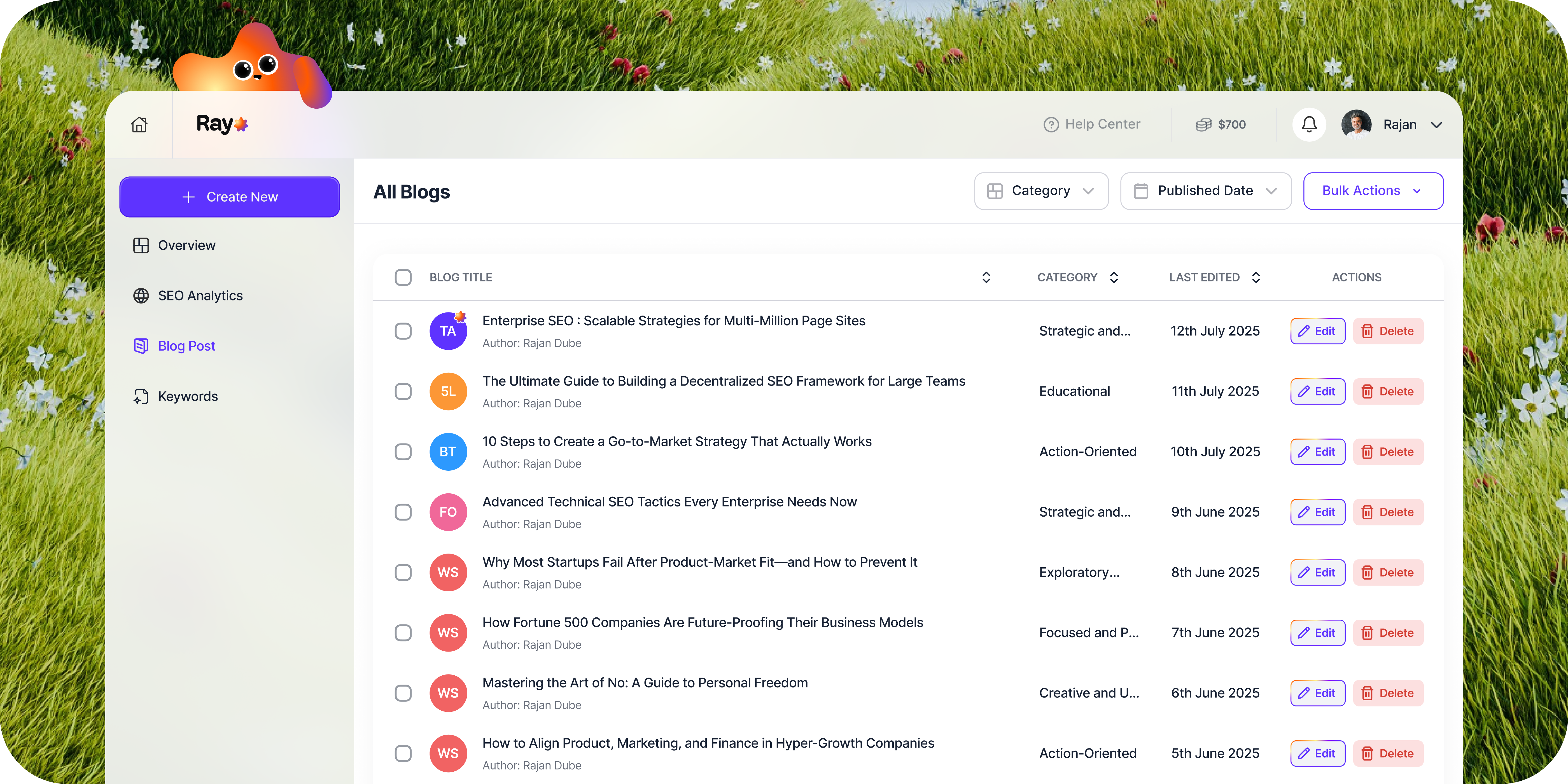
Free AI blog writing tool

AI motion generation for characters

Generate talking head videos from prompts

AI tool that generates text descriptions, captions, and prompts from images
Create custom sound effects from text descriptions

Convert AI-generated text to read as human-written
Generate 3D character animations from text descriptions

Domain name listing on Spaceship marketplace

Convert text to audio with natural-sounding voices

Study complex topics through your favorite characters and memes

Rewrite text in Spanish and remove plagiarism

Dictate and auto-format text 9x faster across any app

Voice-to-text that understands technical terms and jargon

Convert AI-written text to natural, human-sounding writing

Rewrite AI text to bypass detection tools

Web search and semantic rerank API for LLM applications
Free online notepad for quick note-taking and organization

Convert images to detailed text prompts instantly

Image generation with Flux.1 models and LoRA support

Bypass AI detection with one click

SEO-optimized blog posts generated in minutes
This is a technically focused category aimed primarily at developers and ML engineers. Tools like Cognee and UpTrain address retrieval-augmented generation (RAG) pipelines and model evaluation, while platforms like Dstack and PeriFlow handle compute infrastructure for training and inference. Embedding Similarity Calculator and similar utilities fill narrow but useful gaps in LLM development workflows. OpenAssistant and Cerebras-GPT represent open-source or open-weight models that developers can run or fine-tune directly. When comparing options, consider whether a tool is model-agnostic or tied to a specific provider, and whether it supports the models you are already using. Latency, throughput, and cost-per-token are the metrics that matter most for production workloads. Evaluation tools are often underinvested in early projects but become critical once you are shipping to users. Many tools here are open source with paid managed versions, while others are closed SaaS products with usage-based pricing.