

Pros & cons
Our analysisPros
- Trained and tested on USMLE for medical accuracy
- Provides evidence-based answers with citations
- API access available for integration
- Trusted by medical students and physicians
Cons
- No free tier — paid access only
- Scope limited to medical question answering
- API-only delivery limits non-developer access
What users say
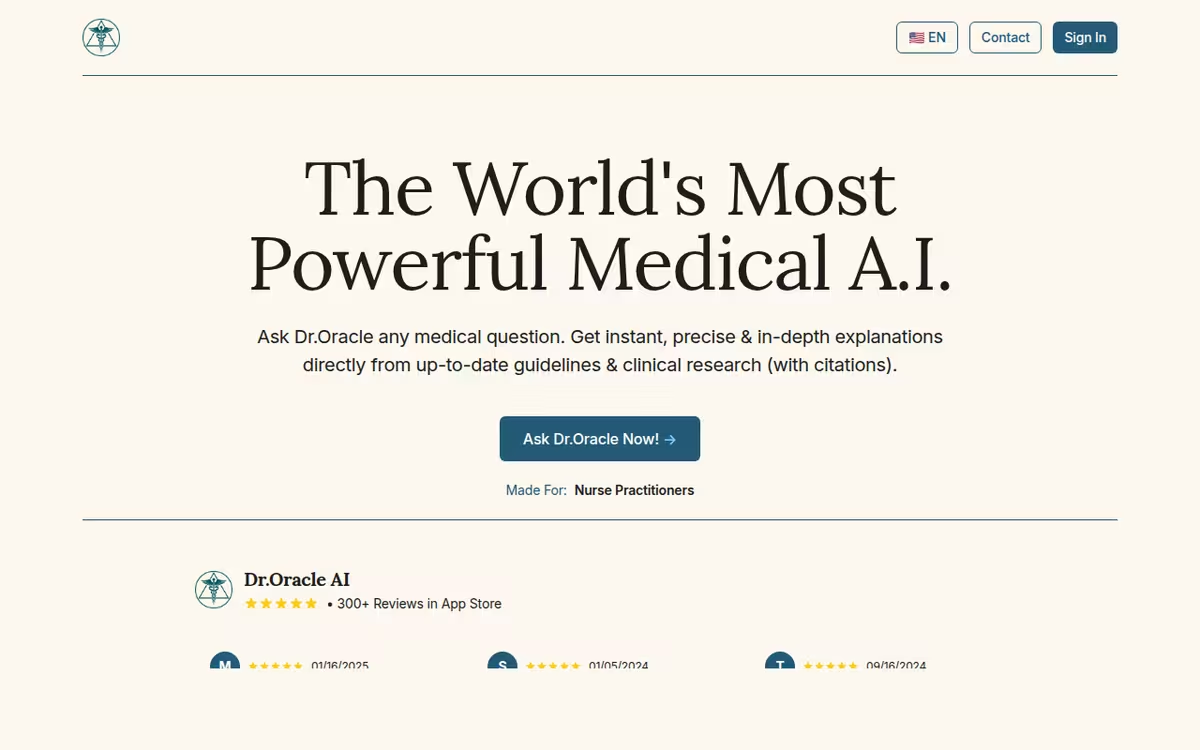
Dr. Oracle is commonly used by medical students preparing for licensing exams and by clinicians seeking fast, evidence-backed answers to complex medical questions. A frequently noted strength is its citation-supported responses grounded in established clinical guidelines, which increases trust in high-stakes settings. A common limitation is the absence of a free tier, which may limit adoption among students on tight budgets. The API-only platform also assumes a level of technical setup that not all end users will have.
Editorial summary based on public information.
Best for
Medical students and physicians needing guideline-based clinical answers
Manually choose competitor  Dr. Oracle
 Perplexity
 You.com
 RivalSense
 bundleIQ
 SYMAR
SYMAR RikiGPT
 Tỷ Lệ Kèo Nhà Cái ⭐️ Keonhacai5 Soi Kèo Nhà Cái Trực Tuyến
 MemFree
| Feature | Dr. Oracle | Perplexity |
|---|---|---|
| Pricing | Paid | Freemium |
| Free tier | No | Yes |
| API | Yes | Waitlist |
| Open source | No | No |
| Platforms | API | Desktop |
| Models | Droracle | Perplexity |
| Context window | 32k | 32k |
| Launched | 2024 | 2023 |
Top alternatives to Dr. Oracle
See all alternatives → Perplexity
AI search that answers questions with inline citations, supporting follow-up questions with full context
You.com
AI search that summarizes results with source citations.

RivalSense
Monitor competitors and uncover market opportunities

bundleIQ
Organizes files and data sources with AI knowledge agent

SYMAR
Market research platform using AI personas, synthetic surveys, and focus groups

RikiGPT
Easier AI research assistant for academic papers
Specs
| Pricing | Paid |
|---|---|
| Free tier | No |
| API | Yes |
| Open source | No |
| Platforms | API |
| Models | Droracle |
| Context window | 32k |
| Launched | 2024 |