

Pros & cons
Our analysisPros
- Camera-based visual search built into Google ecosystem
- Integrates with Google Photos, Chrome, and Camera
- Free to use with broad coverage
- API available
Cons
- Accuracy varies for niche or obscure objects
- Dependent on Google account and ecosystem
- Limited customization for developers
What users say
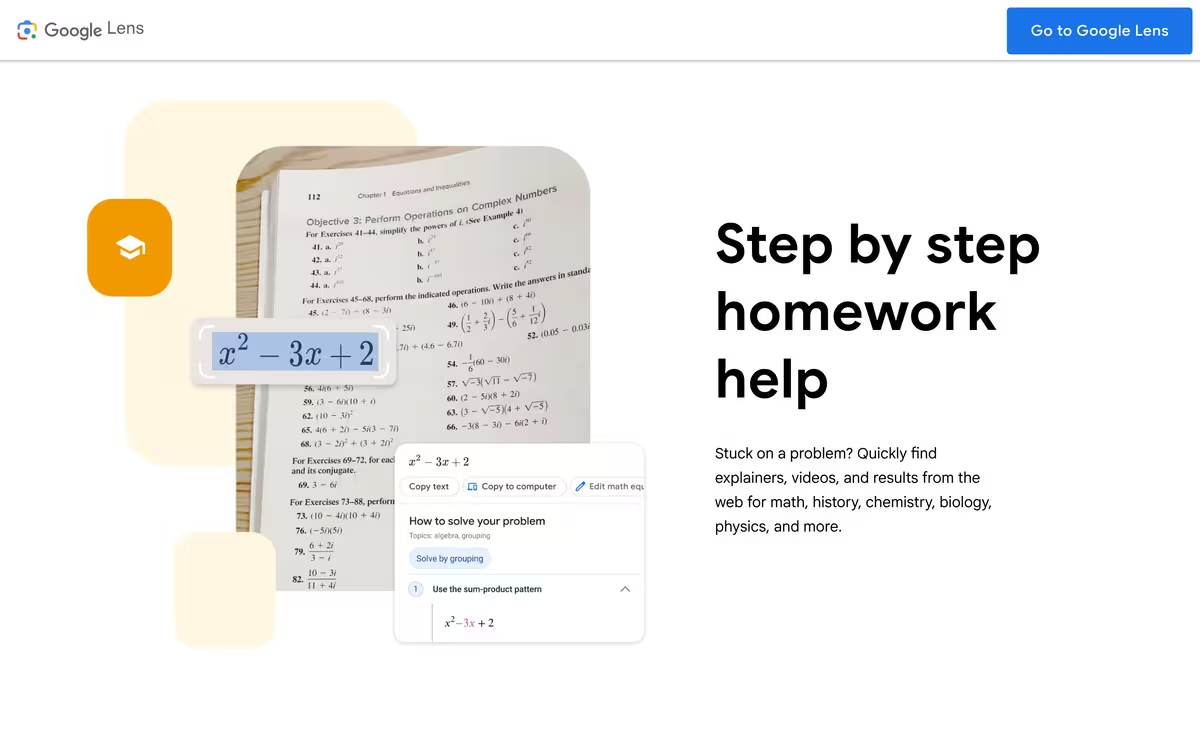
Google Lens is commonly used for real-world object identification, text scanning, and visual product search directly from a smartphone camera. A frequently noted strength is its seamless integration with Google Photos, Chrome, and the broader Google search ecosystem. A common limitation is that recognition accuracy can decline for niche items or low-quality images, and its utility is tied to the Google platform.
Editorial summary based on public information.
Best for
Everyday users identifying objects, text, or products via camera
Manually choose competitor  Google Lens
 Connected Papers
 Ace It
 Profundo
 BigRead
 LitGrades
 NoteKnight
 Chatty Tutor
 Transcript Generator
| Feature | Google Lens | Connected Papers |
|---|---|---|
| Pricing | Freemium | Freemium |
| Free tier | Yes | Yes |
| API | Yes | Yes |
| Open source | No | No |
| Platforms | Web | API |
| Models | Socratic | Connectedpapers |
| Launched | 2013 | 2025 |
| Languages | over 100 languages | — |
| Integrations | Google Images, Google App, Google Camera +2 more | — |
Top alternatives to Google Lens
See all alternatives →


Tags: A Young Ladys Illustrated Primer Ai Ai Education Artificial Intelligence Braintree Deep Information Technology E-learning Providers Education
Verified Jun 2026
Specs
| Pricing | Freemium |
|---|---|
| Free tier | Yes |
| API | Yes |
| Open source | No |
| Platforms | Web |
| Models | Socratic |
| Languages | over 100 languages |
| Integrations | Google Images, Google App, Google Camera, Google Photos, Chrome |
| Launched | 2013 |