

Pros & cons
Our analysisPros
- Works across Netflix, YouTube, Udemy, Disney+, and more
- AI translation with word popups
- Free tier available
- Integrates with DeepL and Google for translation quality
Cons
- Web-only platform
- Relies on third-party streaming platform access
- Advanced features may sit behind paid tier
What users say
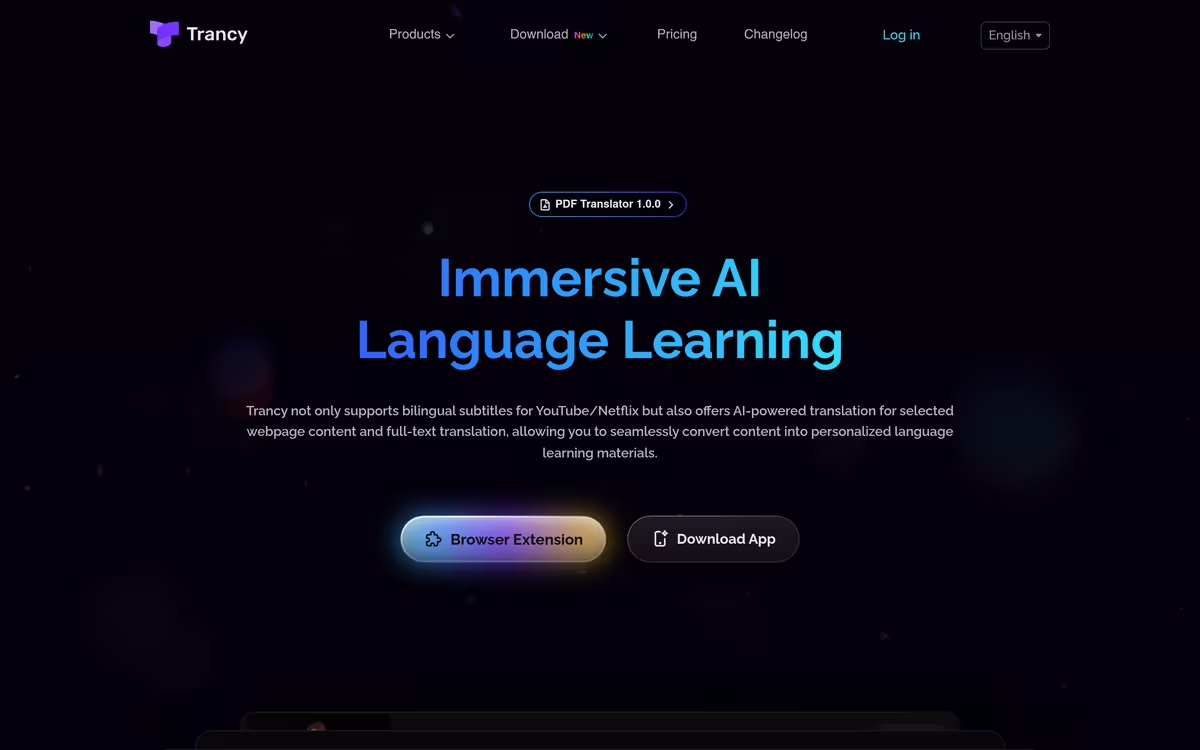
Trancy is commonly used to learn languages by watching content on Netflix, YouTube, Udemy, and other platforms with bilingual subtitles and word popups. A frequently noted strength is the wide platform coverage combined with AI-powered translation backed by Google and DeepL. A common limitation is that it operates as a web tool only, and heavier features likely require a paid subscription.
Editorial summary based on public information.
Best for
Language learners who study through streaming video on multiple platforms
Manually choose competitor  Trancy
 Talkio AI
 Univerbal
 WordDose
 Langotalk
 Proseable
 Tutor Lily
 Talkface
 Kansei
| Feature | Trancy | Talkio AI |
|---|---|---|
| Pricing | Freemium | Freemium |
| Free tier | Yes | Yes |
| API | Yes | Yes |
| Open source | No | No |
| Platforms | Web | Web |
| Models | Trancy | Talkio |
| Context window | 128k | 8k |
| Launched | 2024 | 2023 |
| Integrations | YouTube, Netflix, HBO Max +8 more | — |
Top alternatives to Trancy
See all alternatives →
Talkio AI
Practice speaking with AI tutors and get feedback

Univerbal
Practices conversation in 100+ scenarios with instant feedback

WordDose
Vocabulary app with spaced repetition and games

Langotalk
Personal AI tutor for fluency across 20+ languages

Proseable
Have real conversations in 11 languages

Tutor Lily
Language tutor that teaches through real conversations instead of flashcards
Verified Jun 2026
Specs
| Pricing | Freemium |
|---|---|
| Free tier | Yes |
| API | Yes |
| Open source | No |
| Platforms | Web |
| Models | Trancy |
| Integrations | YouTube, Netflix, HBO Max, TED, EdX, Coursera +5 more |
| Context window | 128k |
| Launched | 2024 |