
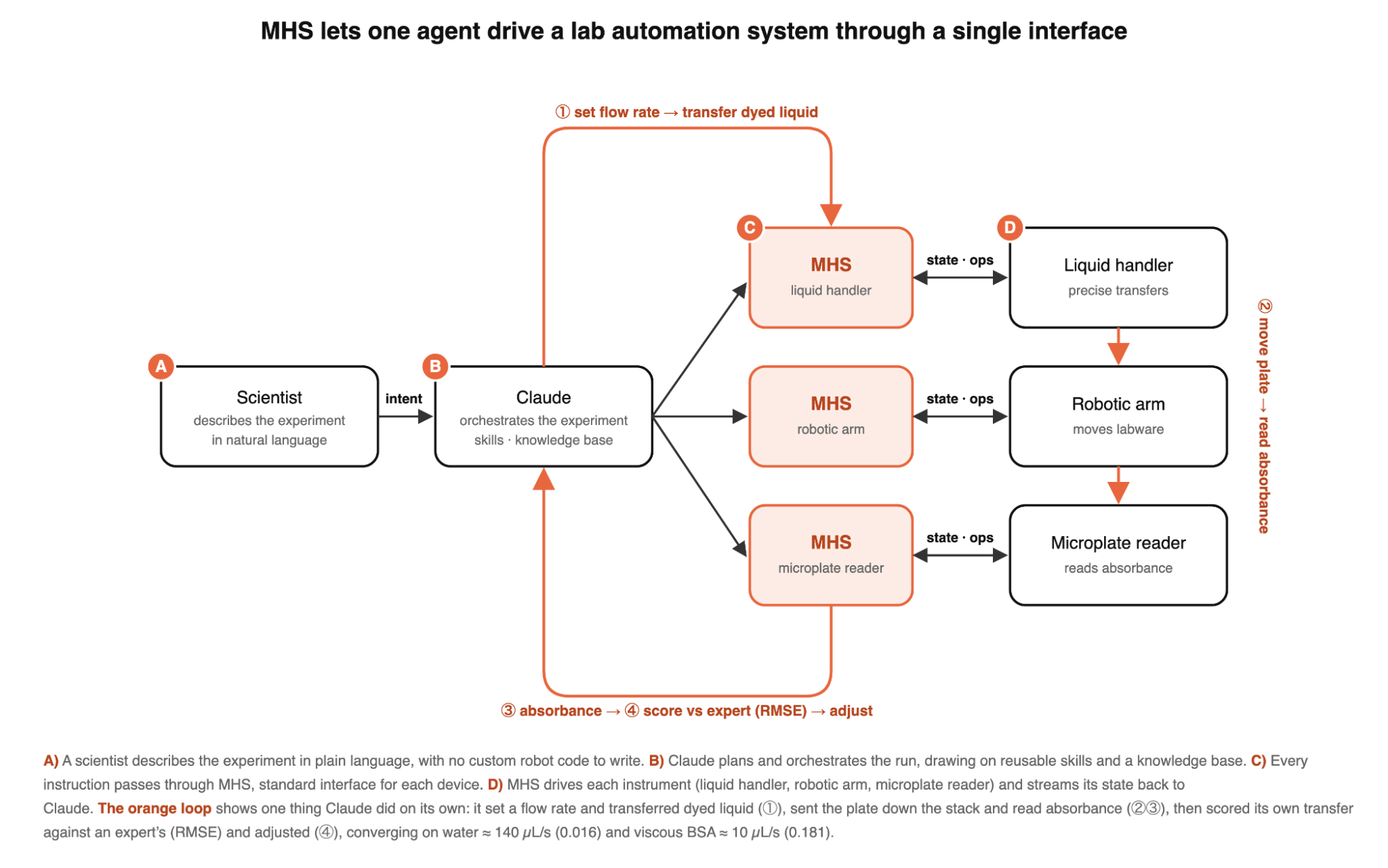
Anthropic has launched an early research preview of the Model Hardware Standard (MHS) to help AI agents control physical equipment. If you run a lab or advanced factory, this project could replace weeks of custom code with a shared standard for real machines.
How the standard connects AI to tools
Anthropic developed MHS together with the HHMI Janelia Research Campus. The system creates a standard software layer between an operating system and physical devices. It targets programmable equipment that agents can run in parallel, such as microscopes, liquid handlers, and robotic arms.
This design targets real physical tools. The interface gives AI agents several direct abilities:
- Standard control. Agents use shared drivers and basic read and write commands across local networks.
- Task chaining. Agents can sequence work, track progress, adjust parameters, and chain complex steps through code files.
- Broad compatibility. The standard is model-agnostic and works with agent harnesses that use common protocols like
MCP.
According to Anthropic, MHS can cut hardware integration time from weeks or months down to hours or minutes. Anthropic also says agents can sometimes recover from hardware errors without human help.
The part you should not trust yet
Those integration-speed and error-recovery claims come entirely from Anthropic’s own materials — nobody outside the company has verified them yet. MHS is currently a partner-limited research preview for a small group of scientific research labs and advanced manufacturers. It is not open source yet, not generally available, and not proven safe for production.
Hardware mistakes bring real danger. A failed software call can be rolled back easily, but a bad hardware command cannot. A wrong instruction can spoil costly samples, break delicate instruments, or create physical hazards.
Why this project matters
Today, connecting an AI agent to lab gear requires custom glue code for every device. That integration friction keeps AI agents stuck as one-off demos. A shared hardware layer makes it easier to compare agent systems, reuse tools, and move automation patterns between different facilities.
Practical steps to try
You do not need to wait for a public release to get ready. If your team explores automated workflows, map your device permissions, audit logs, and stop conditions now.
Start in a safe sandbox first. When testing MHS, follow these practical steps:
- Compare setup times between custom code and MHS on the same task.
- Run early tests with test hardware rather than valuable live samples.
- Practice recovery drills for stalled devices, bad reads, and network discovery errors.
- Always require human approval before moving from dry runs to real physical operations.
Watch how device makers respond and whether independent labs report repeatable results. Until then, MHS is an important planning signal, not a proven tool for autonomous labs.