





One model, two operating boundaries
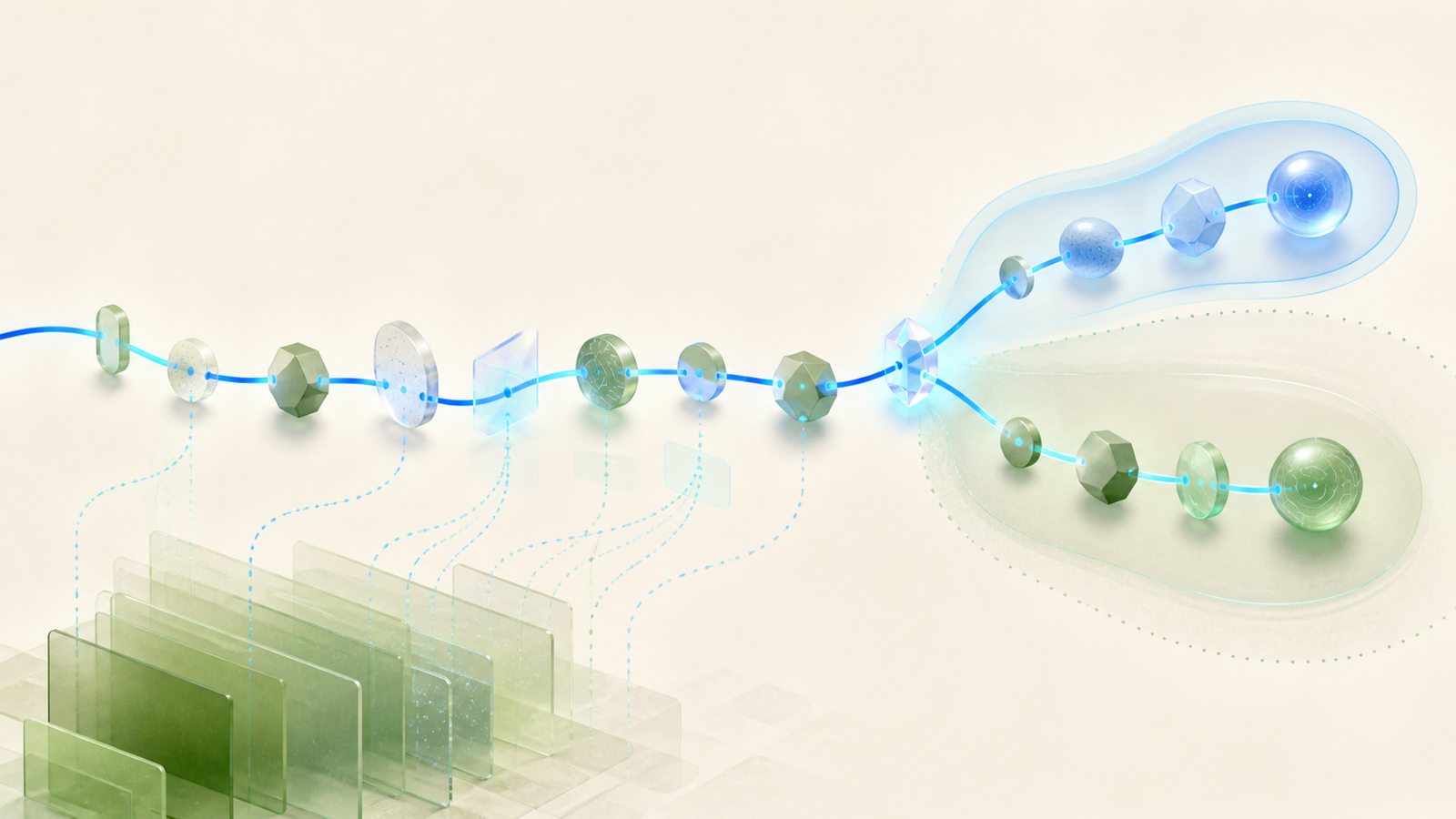
Anthropic announced Claude Fable 5.1 and Claude Mythos 5.1 on 01-09-2026. The configurations use identical model weights. The difference is the safeguard layer wrapped around the same underlying model, so access policy is part of the product definition rather than a footnote.
Fable 5.1 is available to paid Claude users and through web, mobile, desktop, Cowork, Claude Code, Claude Design, Microsoft 365, Tag, the Claude API, and cloud platforms. Mythos 5.1 is not a general drop-in release: direct access is limited to vetted organizations and trusted programs, currently including a set of US organizations.
For agent teams, the choice is which safeguard and access boundary fits the work.
Price makes effort a control surface
Anthropic lists Fable 5.1 and Mythos 5.1 at $10 per million input tokens and $50 per million output tokens. Cache reads cost $0.25 per million tokens, down 75% from the prior $1 rate; cache writes are unchanged. These are token-priced rates, so a plan or cloud marketplace can present billing differently.
Fable 5.1 adds selectable effort levels: low, medium, high, xhigh, and max. Anthropic recommends high as the default and says low or medium can trade some capability for lower cost, with results similar to or better than Fable 5 in its evaluation. Anthropic also estimates about 25% savings on typical workloads and up to about 45% on complex, highly agentic work, based on four weeks of actual August 2026 usage at default effort.
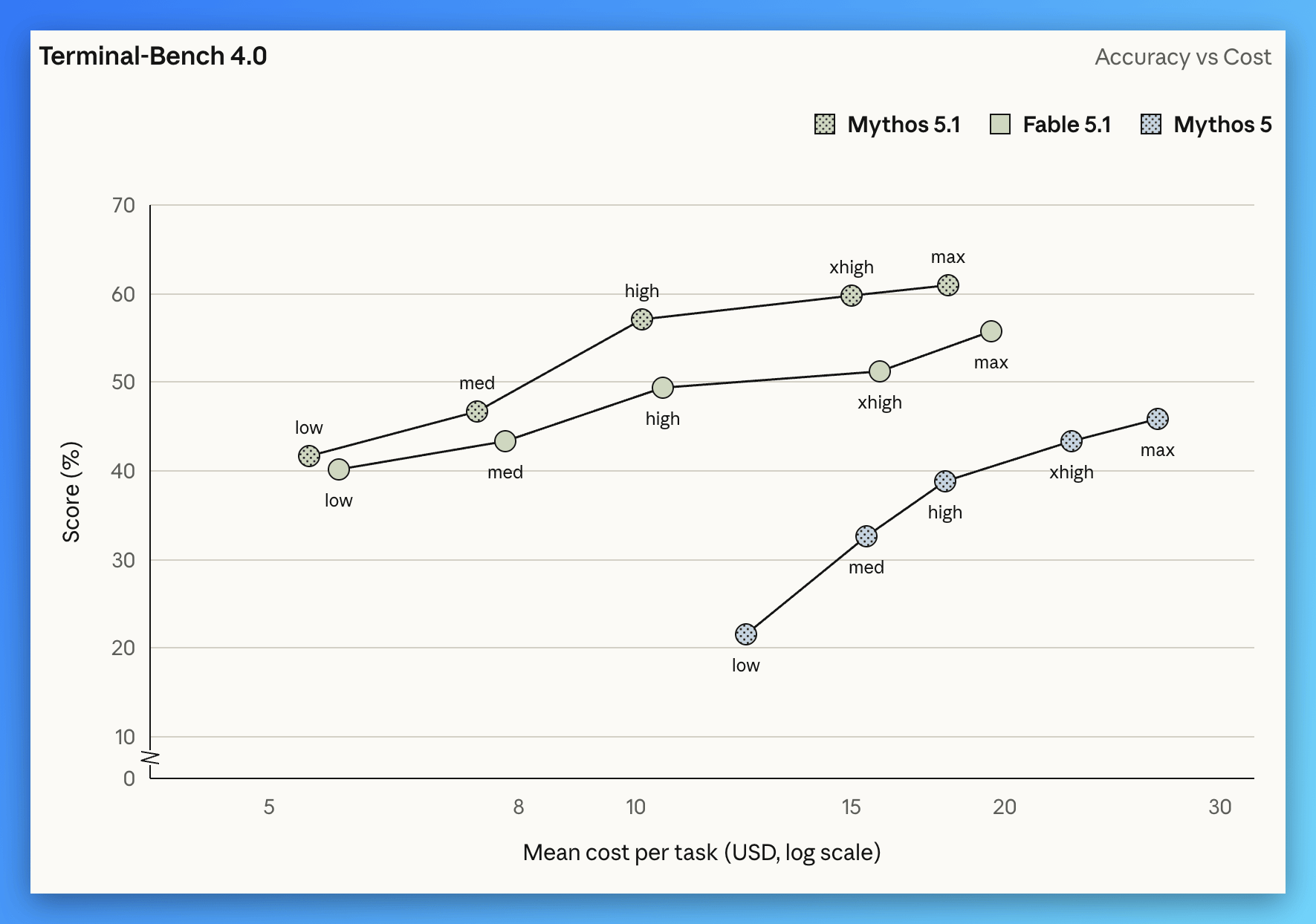
Treat these as a test hypothesis, not a budget guarantee. Measure cache reads and effort against task success, retries, latency, output, and cost per completed workflow.
One related limit change needs the same precision. An official ClaudeDevs update says that when a temporary 50% increase ends on 13-09-2026 and a permanent 25% increase over baseline begins on 14-09-2026, the result is a 17% reduction versus today in Claude Code weekly limits for Pro, Max, Team, and seat-based Enterprise. That is a Claude Code weekly-limit comparison, not a generic cut to every Claude message limit.
Benchmarks show a direction, not a verdict
Anthropic reports Fable 5.1 at 52.6% on Terminal-Bench-Science 0.1, compared with 24.7% for Fable 5, 29.0% for Opus 5, and 22.4% for GPT-5.6 Sol. On Terminal-Bench 4.0, the reported figures are 55.8% for Fable 5.1, 42.0% for Fable 5, 60.9% for Mythos 5.1, 52.3% for Opus 5, and 37.3% for GPT-5.6 Sol.
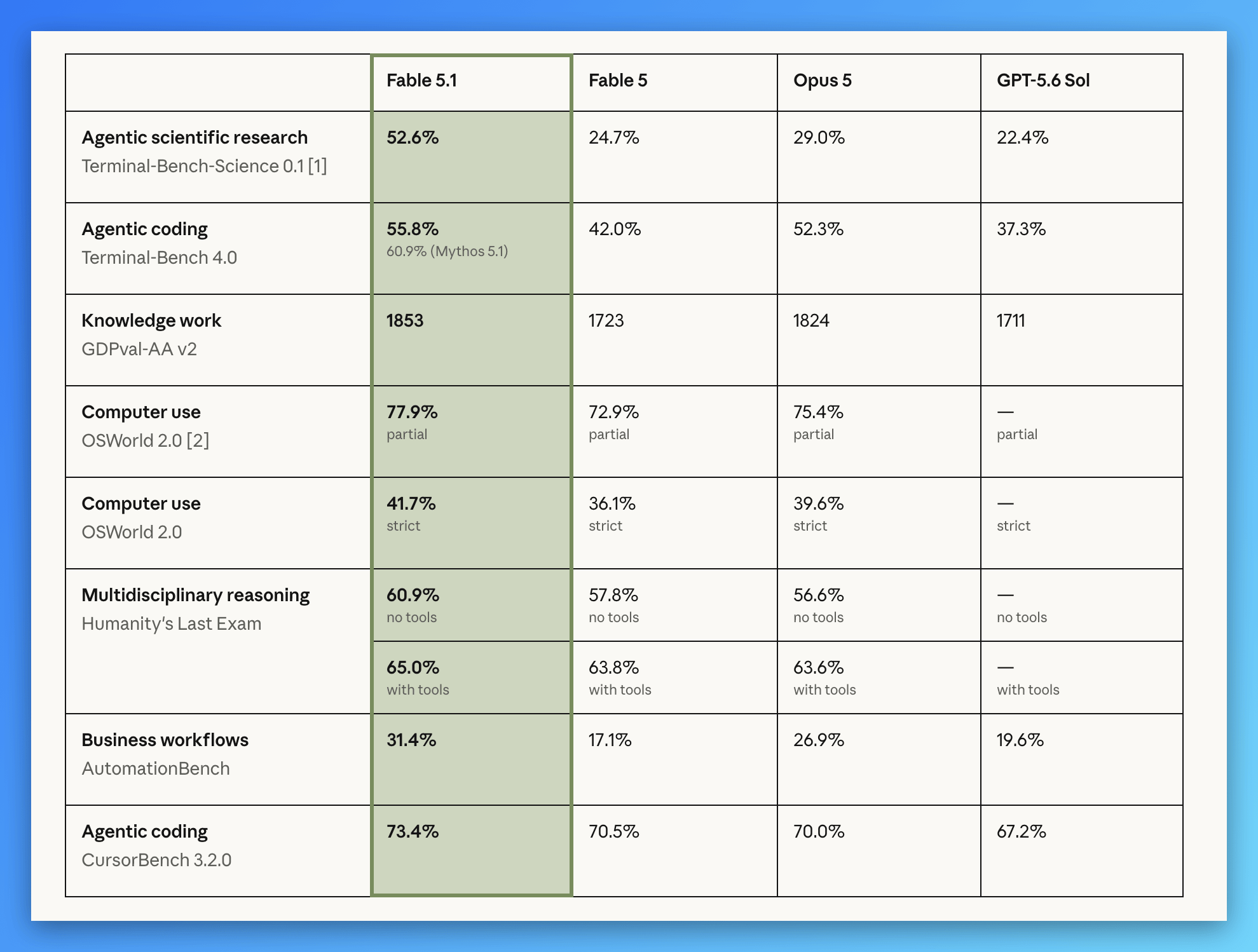
These are Anthropic’s vendor-run, pre-deployment results, not independent proof of superiority. Terminal-Bench-Science carries a standard error of ±3.5–4.5 points per model. Anthropic also notes that OSWorld uses an August 2026 task release that is not directly comparable with earlier releases, while production safeguards and fallbacks can affect scores.
Bounded safeguards, not universal refusal cuts
Anthropic says Claude Code users can expect around 60% fewer cyber-safeguard interventions per session than with Fable 5 safeguards. It also reports that Fable 5.1’s biology safeguards fire 85% less often for benign elementary-biology and medical requests. Neither figure means a universal 60% or 85% reduction in refusals across products. Professional dual-use life-sciences work still routes to Opus or trusted access.
The system card reports external testing, including roughly 74 hours and more than 6,500 requests from Trajectory Labs, with 11 candidate breaks but no working end-to-end exploit from Fable 5.1 alone. It also records one low-severity sandbox-vulnerability incident involving Mythos 5.1 during external testing. That is a reason to keep the access boundary visible, not to treat the launch as risk-free.
The decision for agent builders
Fable 5.1 suits teams that need broad access and a cost experiment. Pin the model surface, effort, cache behavior, and Claude Code limit window. Measure cost per successful workflow on held-out tasks; treat Anthropic’s savings and benchmarks as claims to reproduce.
Mythos 5.1 belongs in a different evaluation lane. The Cyber Verification Program is framed around defensive security work, while the Life Sciences Verification Program is an invite-only beta for professionals using Mythos 5.1 with professional-research safeguards. Project Glasswing is related defensive-security context, not a synonym for both programs.
Outputs from Fable 5.1 and Mythos 5.1 carry a statistical, invisible text watermark. Anthropic says the mechanism adds no tokens and uses no identity data; detection is in private preview. That may matter to teams building audit or provenance checks, but it is not a substitute for access controls, workload tests, or independent review.